Decreasing Littering in Kuwaiti Cinema Theatres Using Salience and Ego

Context:
Littering in public spaces is a common problem. In 2019, Nudge Lebanon, in collaboration with B4Development, the Kuwait Policy Appraisal Lab, and students from the American University of Kuwait, engaged in a small-scale intervention to reduce littering in movie theatres.
Behavioral Challenge:
Individuals fail to dispose of their waste properly because they think someone else will do it for them. In addition, observing others littering can also encourage them to do the same. Drawing from the phenomenon of diffusion of responsibility, when in a crowded area, the personal responsibility that an individual bystander feels decreases.
Intervention Summary:
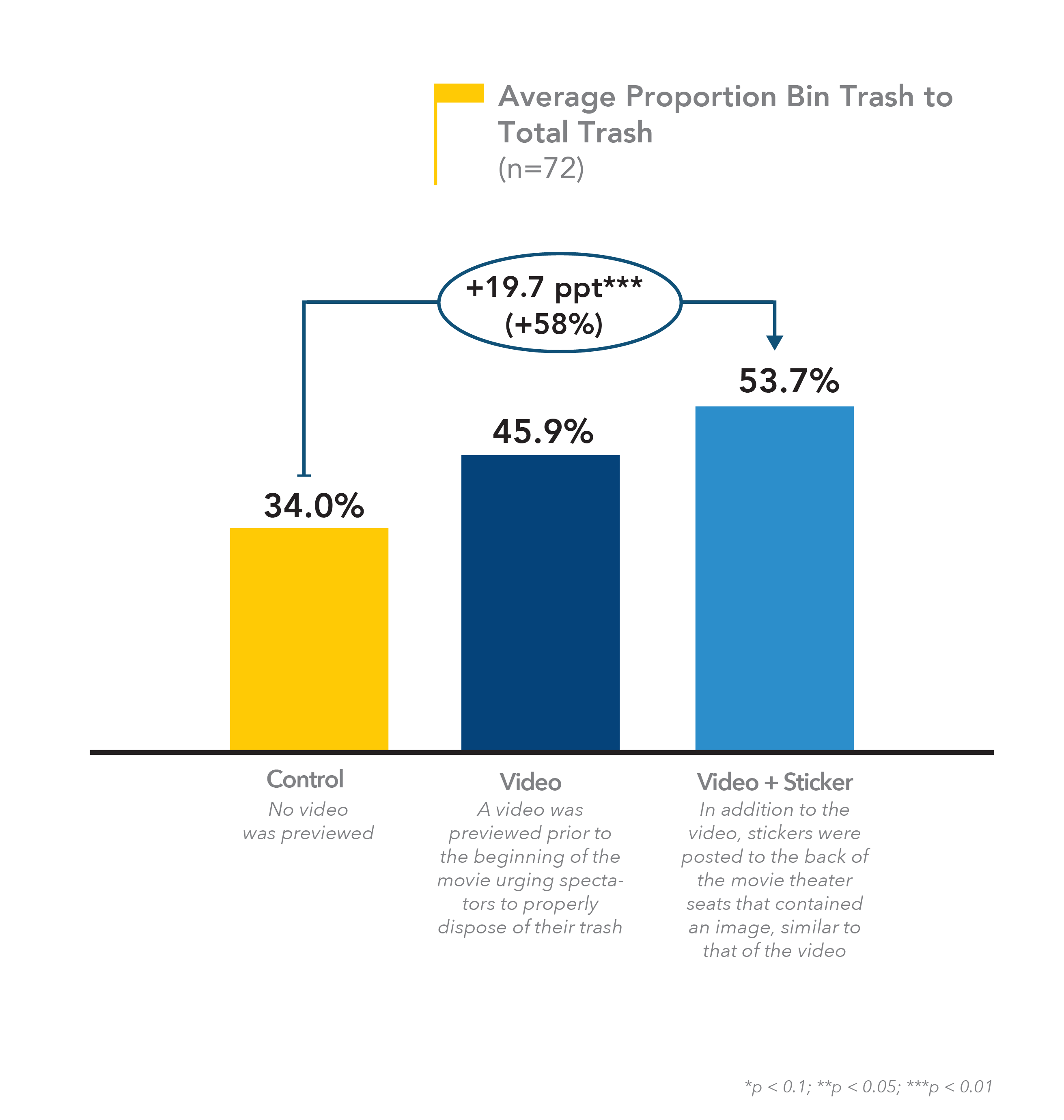
A video prior to the beginning of the movie was played urging spectators to properly dispose of their trash by appealing to their ego. In addition, stickers were saliently posted to the back of the movie theatre seats including a visual on trash disposal and a statement that read “We are counting on YOU to keep the theatre clean!”.
Impact:
The intervention led to a statistically significant increase in the average properly disposed waste by 58% in the presence of both, the stickers and the video.
Increasing The Use of Glass Recycling Bins Through Behaviorally Informed Interventions

Context:
Communal glass recycling bins were scattered in various neighborhoods in Beirut, however, some of these bins were less utilized than others, with high levels of contamination, i.e. non-glass. In 2018, Nudge Lebanon, in partnership with Cedar Environmental, designed three consecutive interventions aimed at increasing the use of street-side glass-only recycling containers in Hamra while minimizing their contamination by non-glass items.
Behavioral Challenge:
Individuals fail to recycle glass due to the lack of appropriate visual cues and misleading advertisements which can also contribute to the contamination of recycling bins, and a lack of social cues in the absence of observable traffic around the bins.
Intervention Summary:
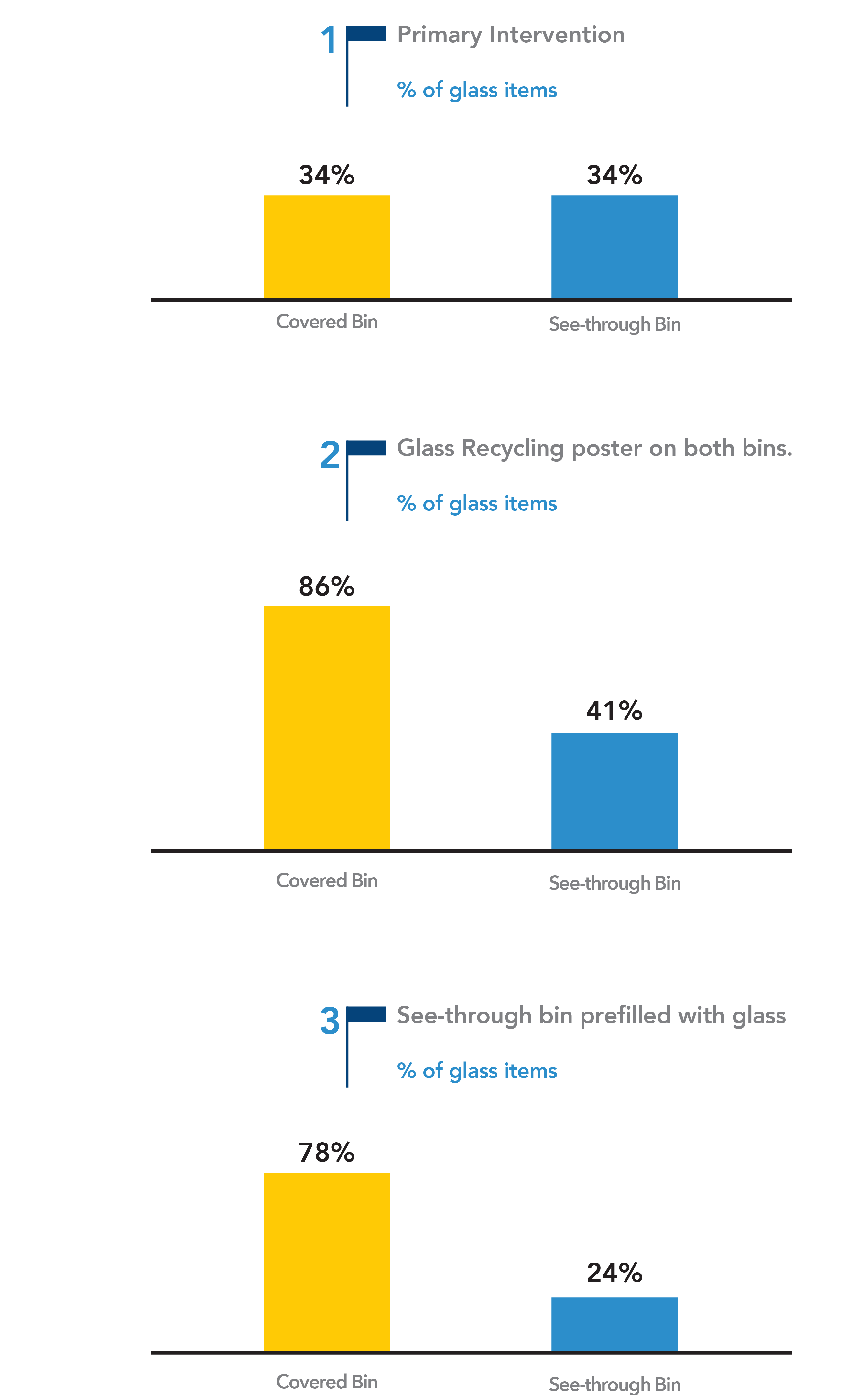
The first intervention consisted of placing one opaque bin and one see-through. Then in the second intervention, the confusing artwork was replaced with a simple and salient “Glass Recycling ♻” poster on both, the opaque and the see-through bins. In the final intervention, the see-through bin was pre-filled with a small number of glass items to increase the salience of its intended purpose and provide social proof on its increasing use.
Impact:
In the first intervention, both bins revealed equally high levels of contamination, with 34% glass items in each. The second intervention led to a drop in contamination in both bins, with 86% of newly disposed glass items in the opaque bin and 41% in the see-through bin. Lastly, the third intervention led to an increase in contamination, with 78% of newly disposed glass items for the opaque bin and 24% in the see-through bin. All three interventions revealed high contamination rates in the see-through bin, suggesting that having even the slightest levels of contamination signaled that it was acceptable to dispose non-glass items, creating a negative norm around the bin.
Decreasing The Demand For Plastic Cutlery Using Active Choice
Context:
Despite the harmful effects of plastic on the environment, most restaurants continue to provide plastic cutlery with their delivery orders by default, even when customers may not necessarily need or want it. In 2017, Nudge Lebanon designed a behavioral intervention to reduce the demand for plastic cutlery with delivery orders.
Behavioral Challenge:
Customers do not usually care or think to ask for the exclusion of plastic cutlery during food delivery orders due to status quo bias.
Intervention Summary:
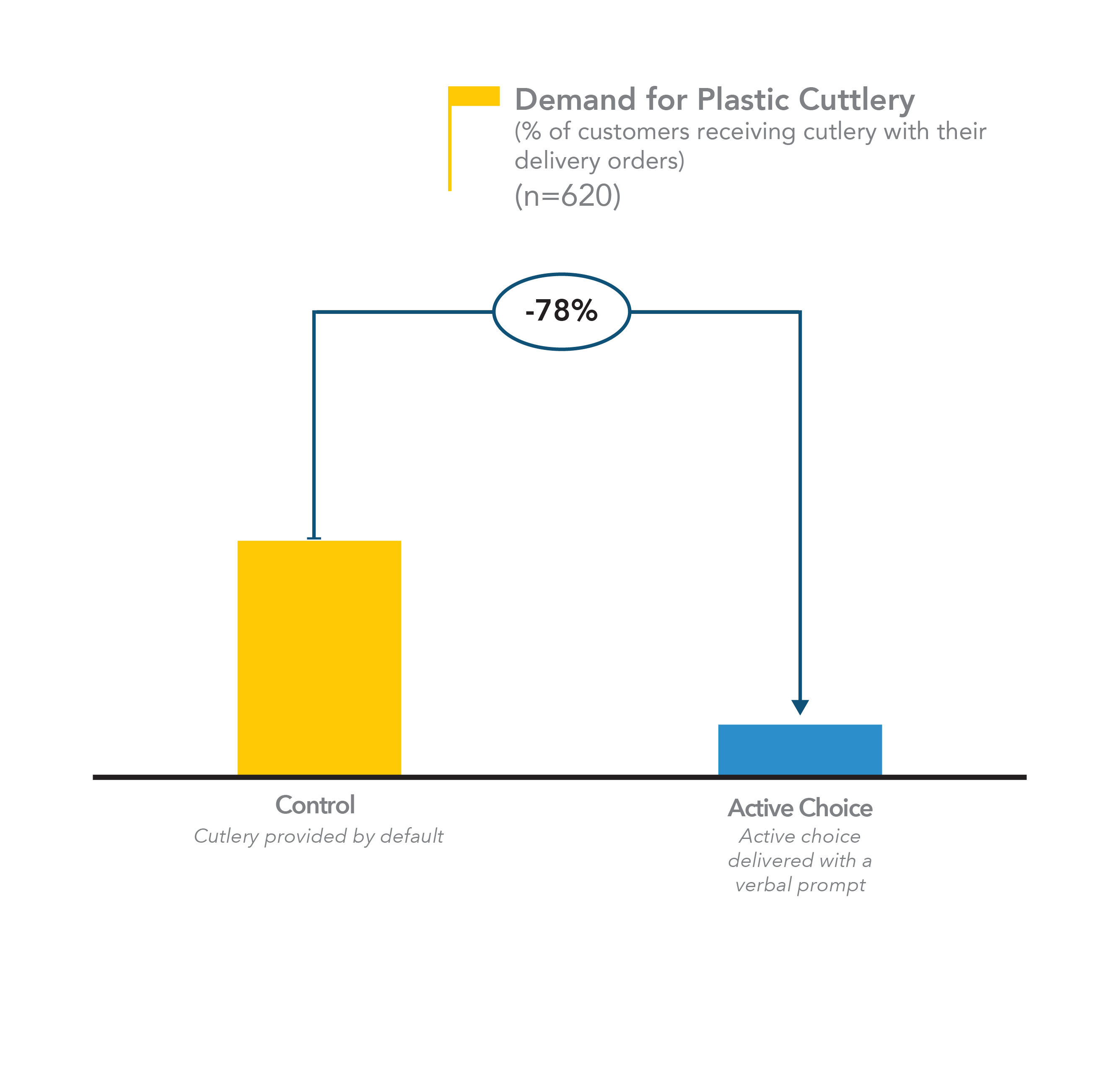
Subjects received an environmentally-framed verbal prompt over the phone by staff of the call center when placing food orders, to provide them with an active choice to opt-out of receiving plastic cutlery with their order.
Impact:
The intervention led to a decrease in the the amount of plastic cutlery dispensed by a local restaurant by 78%.