Decreasing Speed on Yarze highway Through A Salient Variable Sign

Context:
The lack of compliance with traffic laws is a public safety hazard that places the lives of citizens at risk. In 2018, Nudge Lebanon, in collaboration with the Ministry of Interior’s Traffic Control Room, implemented a behavioral intervention to decrease the average speed of cars on the Yarze highway.
Behavioral Challenge:
Individuals fail to abide by traffic laws when their behavior is not being monitored.
Intervention Summary:
An image of overlooking eyes was placed along with a message informing drivers that their speed is being monitored on a Variable-Message Sign over the highway.
Impact:
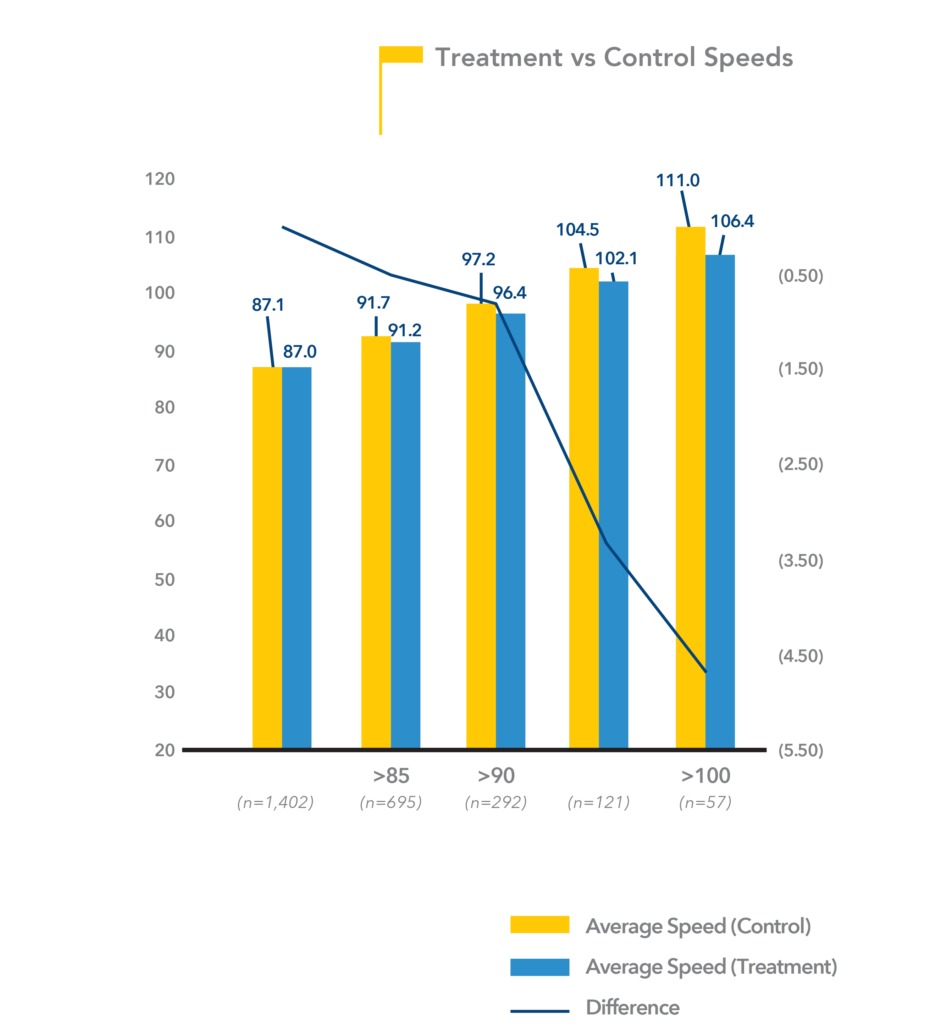
The intervention led to a statistically significant decrease in the average speed of cars travelling over 100 km/h by around of 11.5%. Disaggregating results show that drivers in higher speed brackets exhibited greater reductions in speed than drivers in lower speed brackets.
Increasing Compliance With Social Distancing Through Behaviorally Informed Interventions

Context:
Although governments have exerted efforts to control the spread of the corona virus, it may not have the desired impact if a significant proportion of the population are unable or unwilling to comply. In 2020, Nudge Lebanon, B4Development in collaboration with the London School of Economics, conducted a study in Middle Eastern and Latin American countries to test whether risk perceptions towards COVID-19 and time had an impact on compliance.
Behavioral Challenge:
Individuals tend to comply less with preventive measures overtime due to behavioral fatigue and risk habituation.
Intervention Summary:
Individuals took a pilot survey about their risk perceptions and compliance with preventive behaviors. 10 days later, they were asked to answer a follow up survey on their compliance with the initial preventive behaviors.
Impact:
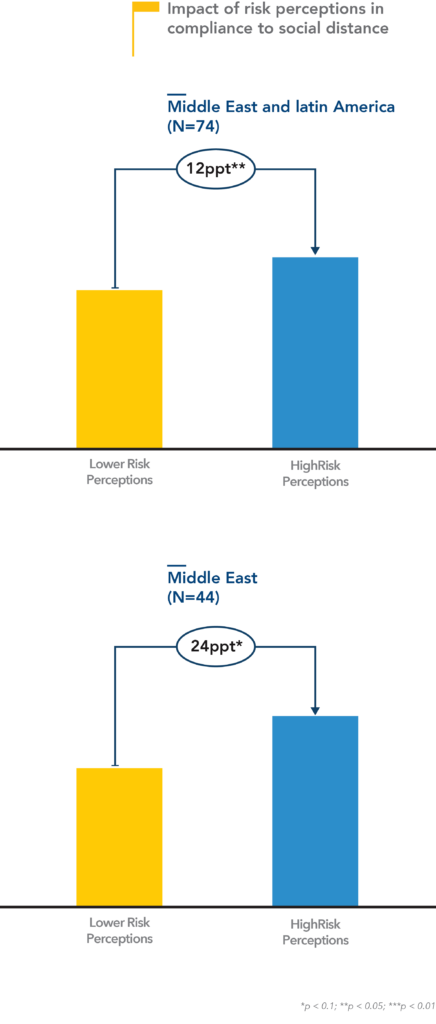
The results showed that handwashing behaviors significantly decreased overtime in both Latin America and the Middle East. Additionally, increased risk perceptions also increased compliance rates, in particular, with restrictions on social gatherings by 12 ppt. The results were higher in magnitude in the Middle Eastern sample, showing a 24 ppt increase in compliance.
Increasing Seatbelt Compliance Rates By Delivering Timely Reminders
Context:
A traffic law was introduced in 2012 to enforce seatbelt use through the use of hefty fines and license revoking in case of non-compliance. Despite this, seatbelt compliance rates remained low. In 2017, Nudge Lebanon designed a behavioral intervention to increase the number of drivers fastening their seatbelts.
Behavioral Challenge:
Individuals fail to wear their seatbelts due to forgetfulness.
Intervention Summary:
A verbal prompt was delivered by valet parking attendants to drivers reminding them to fasten their seatbelt as they entered their car.
Impact:
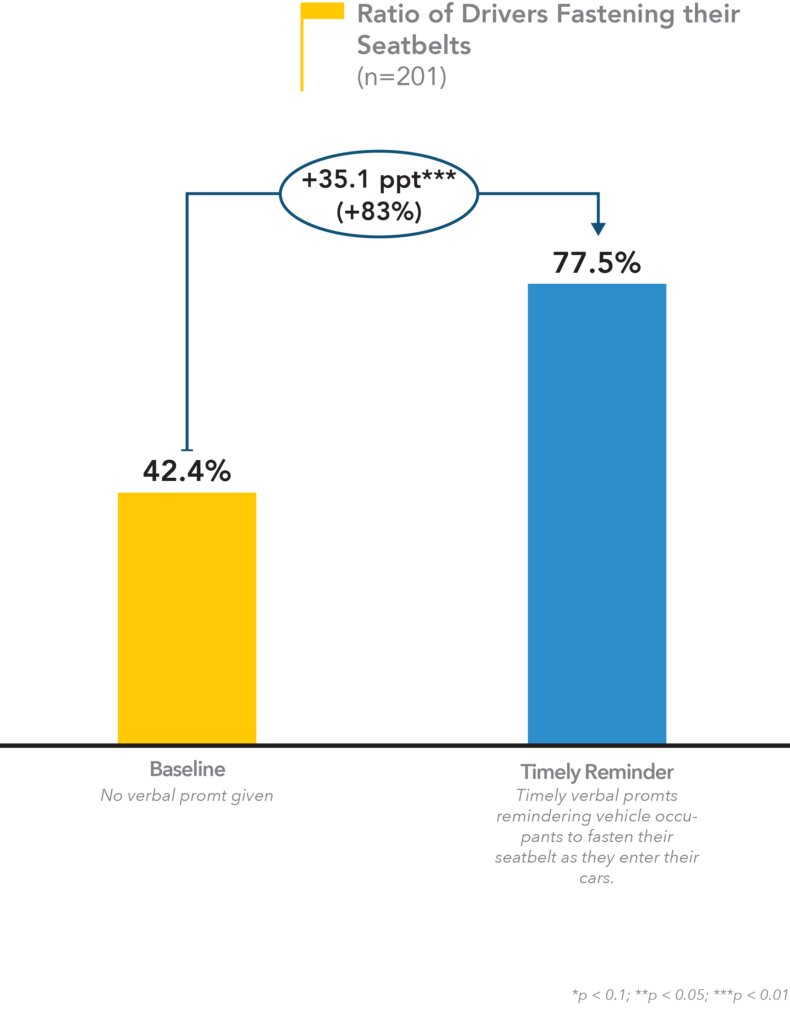
The intervention led to a statistically significant increase in the number of drivers fastening their seatbelts by 83%.