Increasing Salad Consumption Using Dynamic Social Norms

Context:
Studies show that a vegetarian diet can offer a range of health benefits such as reducing the risk of cardiovascular disease and various types of cancer. Despite this, meat consumption remains substantially high amongst the Lebanese population. In 2019, Nudge Lebanon, in collaboration with students from the American University of Beirut, designed a behavioral intervention to increase salad orders at a local restaurant in Beirut.
Behavioral Challenge:
Although individuals are aware of the importance of vegetables in their daily diets, the majority of people still overwhelmingly consume non-vegetarian food items.
Intervention Summary:
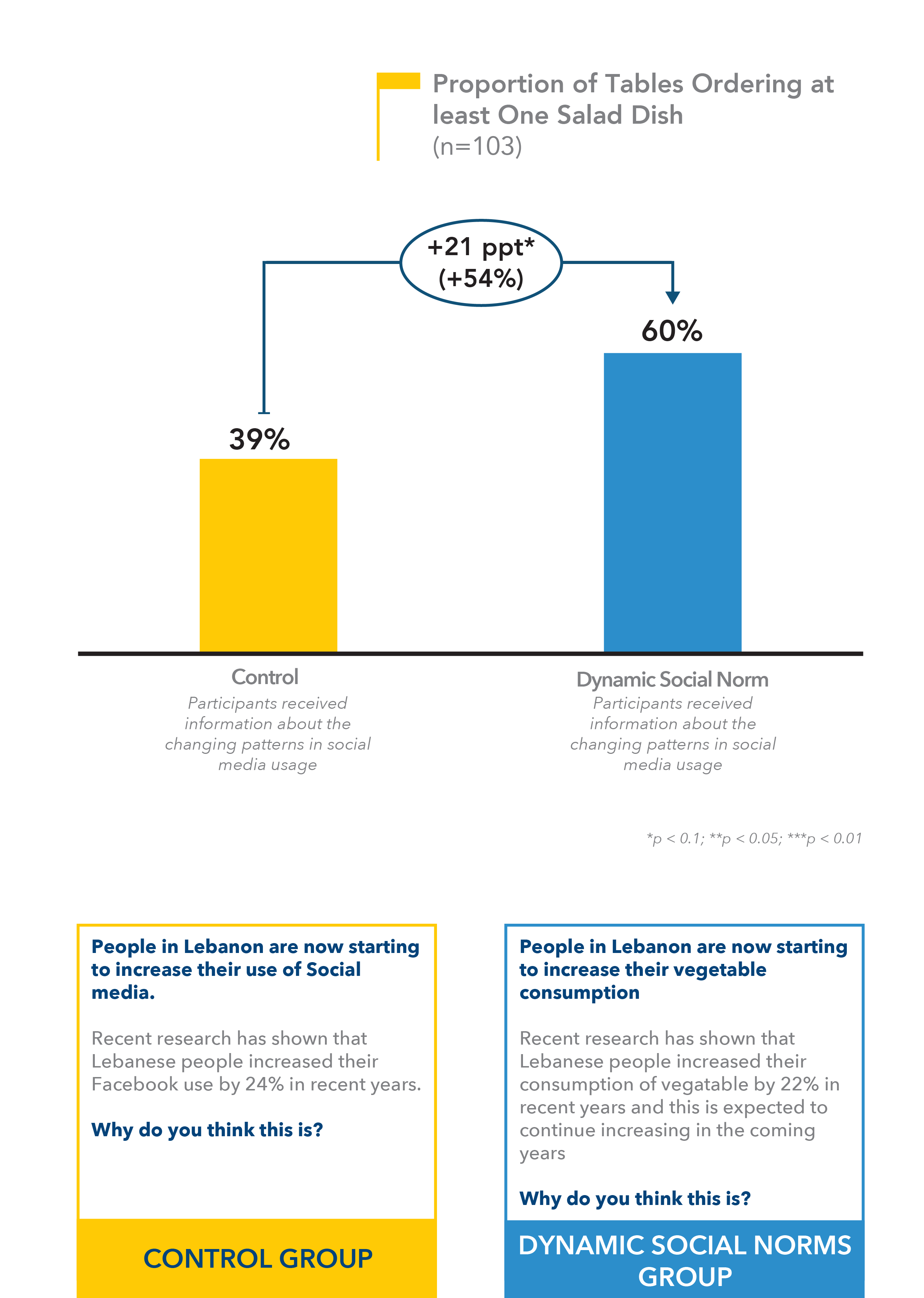
Subjects received a dynamic social norm illustrating the increasing trend of vegetable consumption in Lebanon which was delivered through a short survey they were asked to complete when seated at their table.
Impact:
The intervention led to a statistically significant increase in the probability of a salad being ordered by diners by 54%.
Increasing the Uptake of Immunization Services Among Unvaccinated Children Through a Behaviorally Informed Calendar
Context:
With a rapidly growing population and a rise in poverty levels, measles has reemerged in low coverage areas across Lebanon. In response, the Accelerated Immunization Activities (AIA) program was launched to provide quality immunization services for every child through the primary healthcare system. In 2018, Nudge Lebanon, in collaboration with UNICEF and the Ministry of Public Health, implemented and evaluated a behavioral intervention to improve the delivery of the AIA program.
Behavioral Challenge:
Many caretakers fail to vaccinate their children due to lack of trust in the quality of services provided by healthcare centers, a strong belief that they are entitled to received better vaccination services, the adverse influence of peers who have had a negative experience at a healthcare center, neglect and forgetfulness, and the lack of awareness that others are using the service.
Intervention Summary:
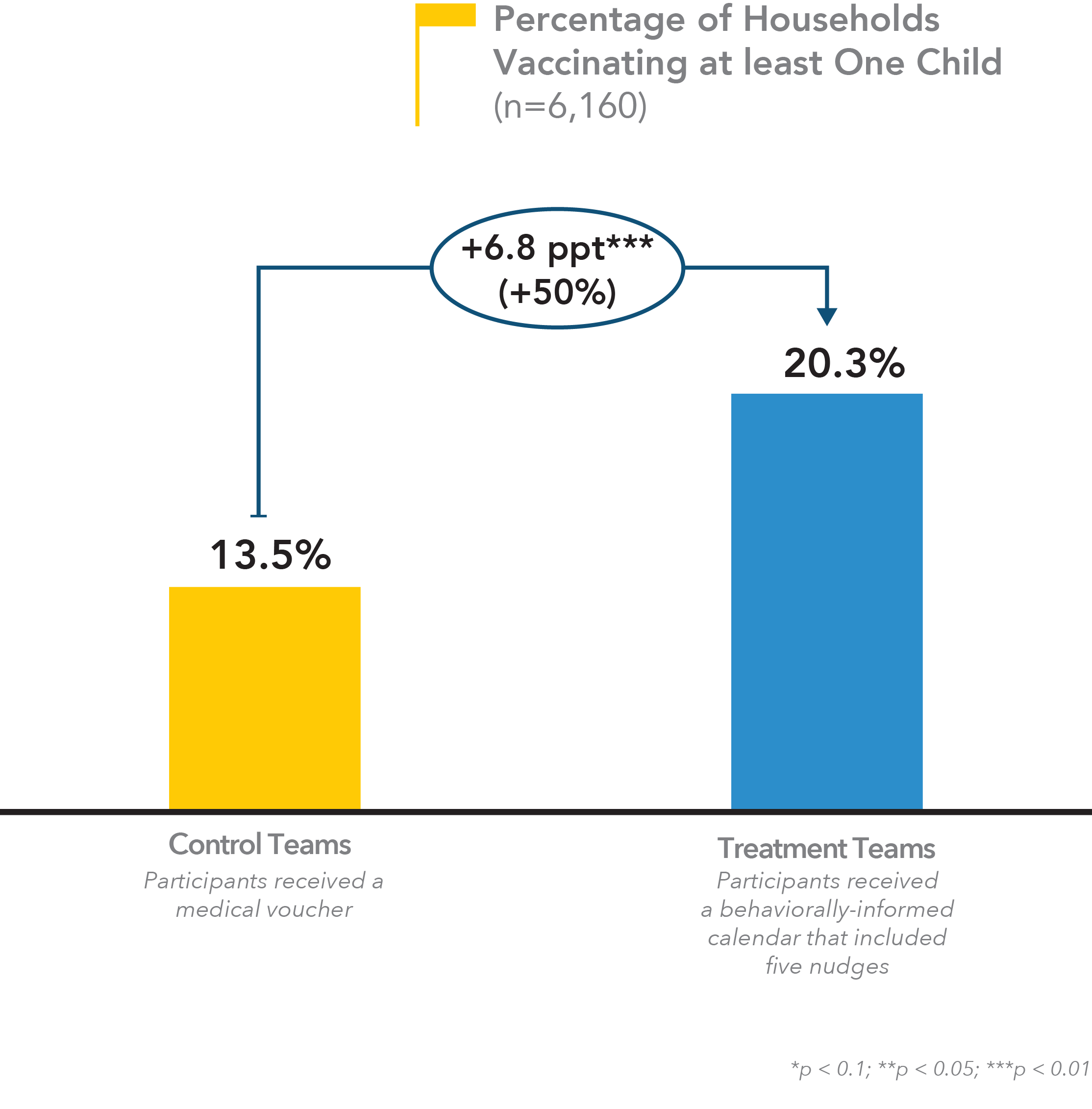
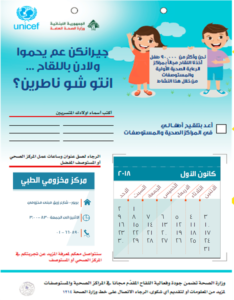
Subjects received a behaviorally-informed calendar that used a collection of behavioral tools including social norms, commitment, implementation intention plan, effect of messenger, and a salient reminder utilizing the kitchen-sink approach.
Impact:
The intervention led to a statistically significant increase in the probability of household vaccinating at least one child by 50%.
Increasing Health-Seeking Behavior for Hypertension Through Behaviorally Informed Reminders
Context:
High blood pressure or hypertension is one of the leading risk factors contributing to cardiovascular diseases. In 2018, Nudge Lebanon and its partners designed a two-phase intervention offering free blood pressure readings to participants in the Beirut Marathon, and nudged those with hypertension to seek medical care.
Behavioral Challenge:
Many individuals fail to schedule routine medical check-ups with their healthcare providers because they are not aware of pre-existing conditions or they are forgetful.
Intervention Summary:
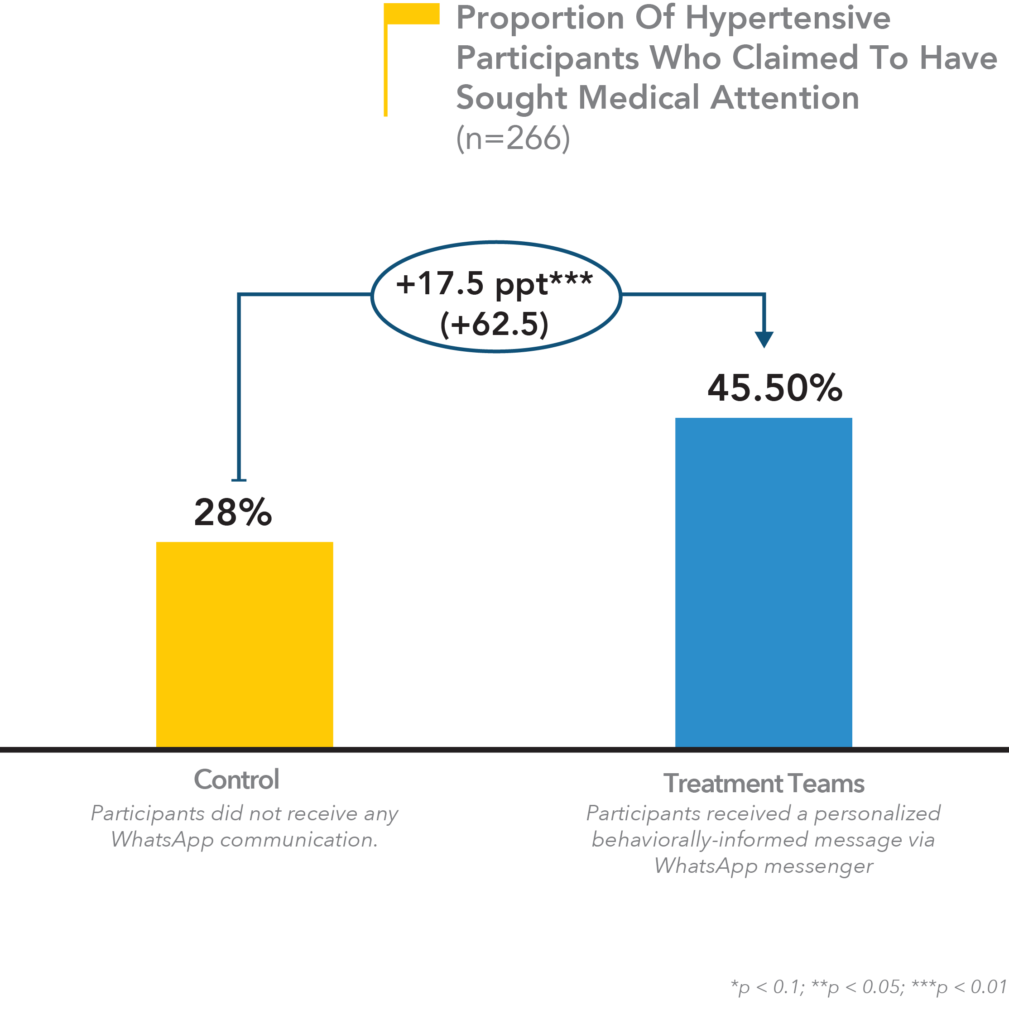
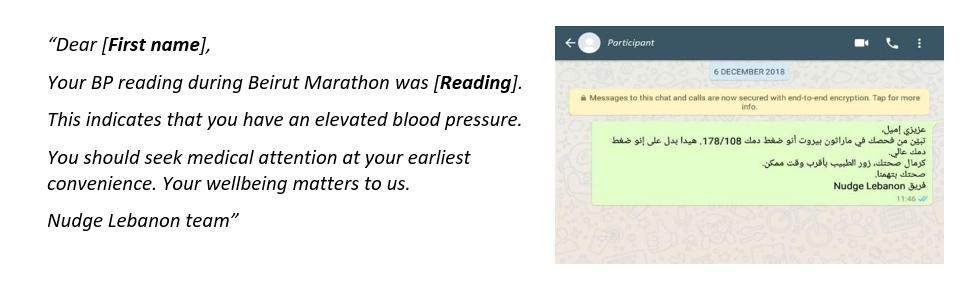
Subjects were screened for high blood pressure at the Beirut Marathon. Twenty five days later, those with hypertension received a personalized WhatsApp message including their name, their recorded blood pressure, and a statement urging them to seek medical attention.
Impact:
The intervention led to a statistically significant increase in the probability of seeking medical attention by 62.5%.
Increasing the Likelihood of Mental Health Patients Following-up With Their Health Providers Through Self-Assessment Cards
Context:
In 2015, the Ministry of Public Health Lebanon launched the 2015-2020 National Mental Health Strategy in an effort to integrate mental health into Primary Healthcare centres through the National Mental Health Programme (NMHP) . To complement the objectives of the National Mental Health Strategy in 2018, Nudge Lebanon, in collaboration with NMHP, designed and implemented a behavioral intervention to increase the likelihood of mental health patients following-up with their health providers.
Behavioral Challenge:
Individuals fail to follow-up with their mental health providers due to forgetfulness, which can be more prominent among patients with depression as they can have a tendency to be more forgetful.
Intervention Summary:
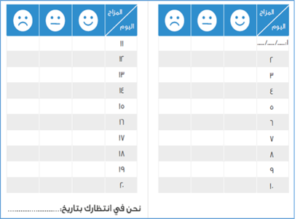
Subjects received a self-assessment card to track their daily mood change and to remind them of their prescheduled follow up appointment.
Impact:
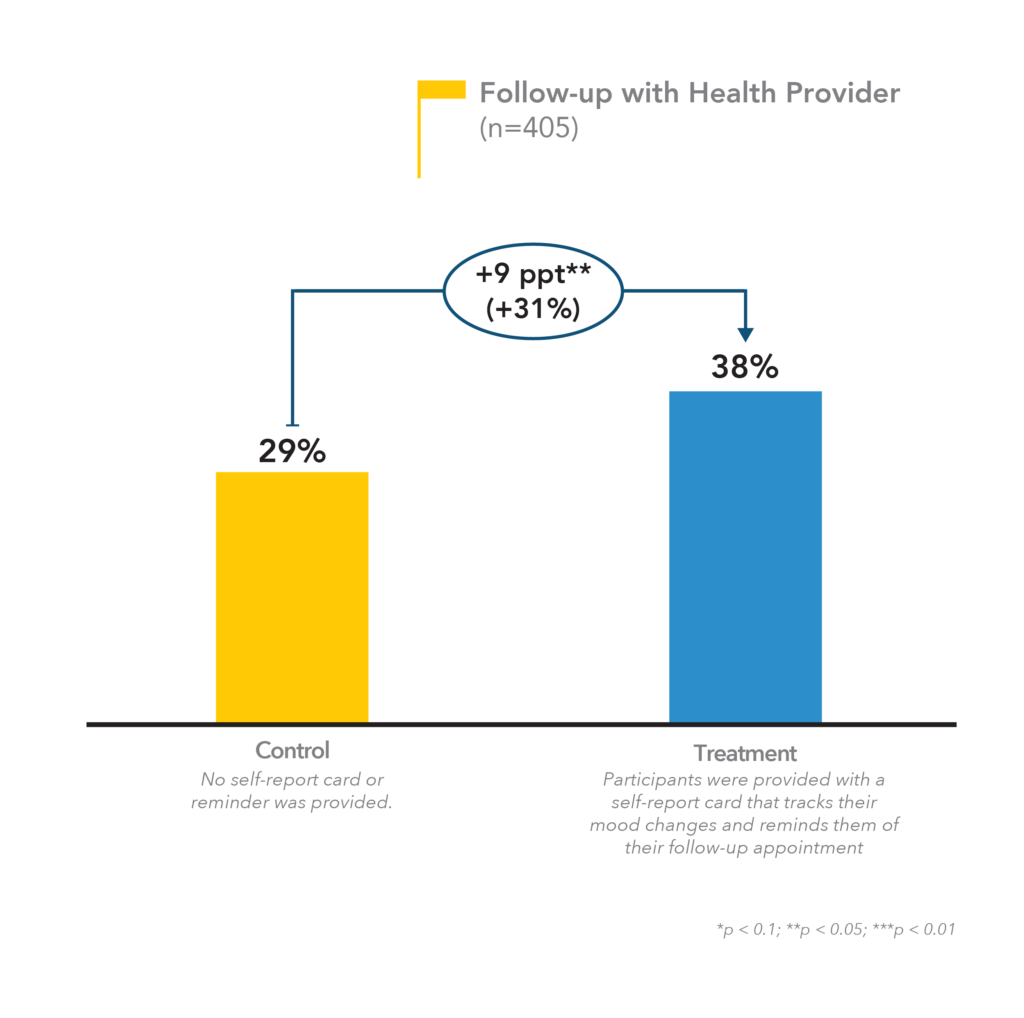
The intervention led to a statistically significant increase in the probability of following-up with mental health providers by 31%.