Increasing the Likelihood of Vulnerable Youth Attending Community Support Sessions Through a Commitment Device and Reminders

Context:
As part of its ongoing efforts to alleviate the impact of the war in Yemen on its inhabitants, the UNDP and its partners developed psychosocial support sessions to help participants cope with trauma, address conflicts, and build social cohesion. In 2018, Nudge Lebanon, in collaboration with UNDP, designed a behavioral intervention in Yemen to increase the likelihood of vulnerable youth attending psychosocial support sessions.
Behavioral Challenge:
Many vulnerable youth fail to attend community support sessions because they have limited processing power, experience present bias, are forgetful or procrastinate. These challenges are amplified under the increased stress of conflict and poverty.
Intervention Summary:
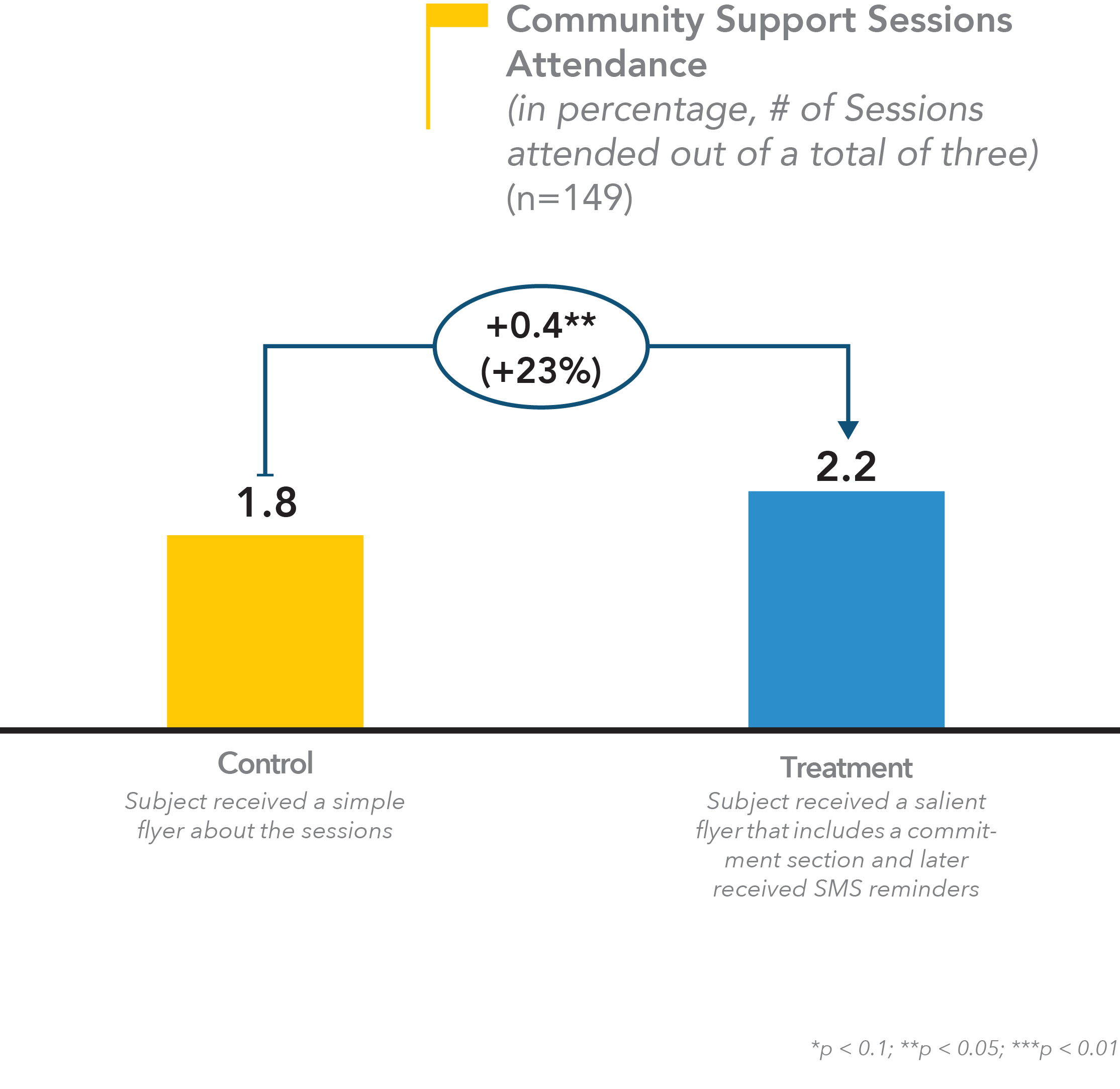
Subjects received a registration form that included a commitment section where they could tick a box to “promise to attend all 3 session”, a map of the session location to make it easy to find it, and later received SMS reminders.
Impact:
The intervention led to a statistically significant increase in the likelihood of vulnerable youth attending community support sessions by 23%.
Boosting Attitudinal Resistance Against Extremist Persuasion Techniques Using the Radicalise Game

Context:
Online recruitment by violent extremist organizations has proven to be a pernicious problem.
In recent years, hundreds of US and European citizens have joined extremist organizations in the Middle East or were apprehended in the attempt. In 2019, Nudge Lebanon and researchers from the University of Cambridge, in collaboration with B4Development, developed and tested a novel online game, Radicalise, which aims to combat the effectiveness of online recruitment strategies used by extremist organizations.
Behavioral Challenge:
People are more vulnerable to manipulative arguments and malicious communications that they have not been exposed to earlier.
Intervention Summary:
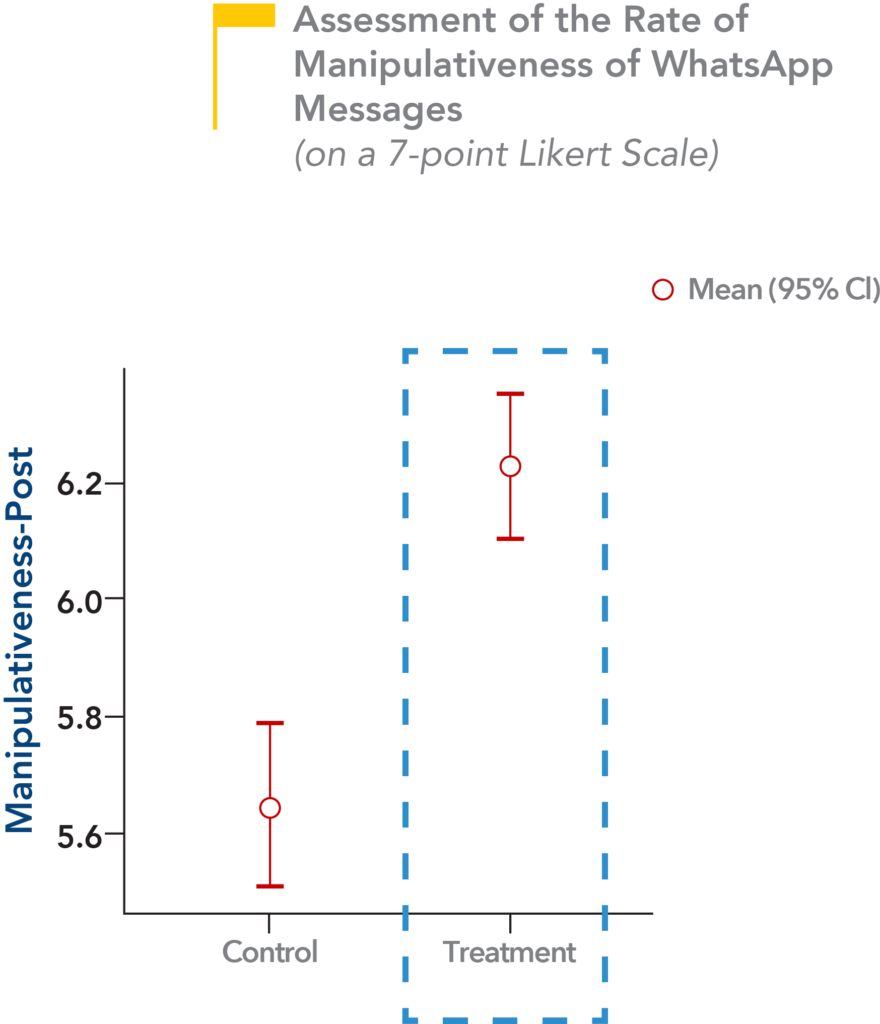
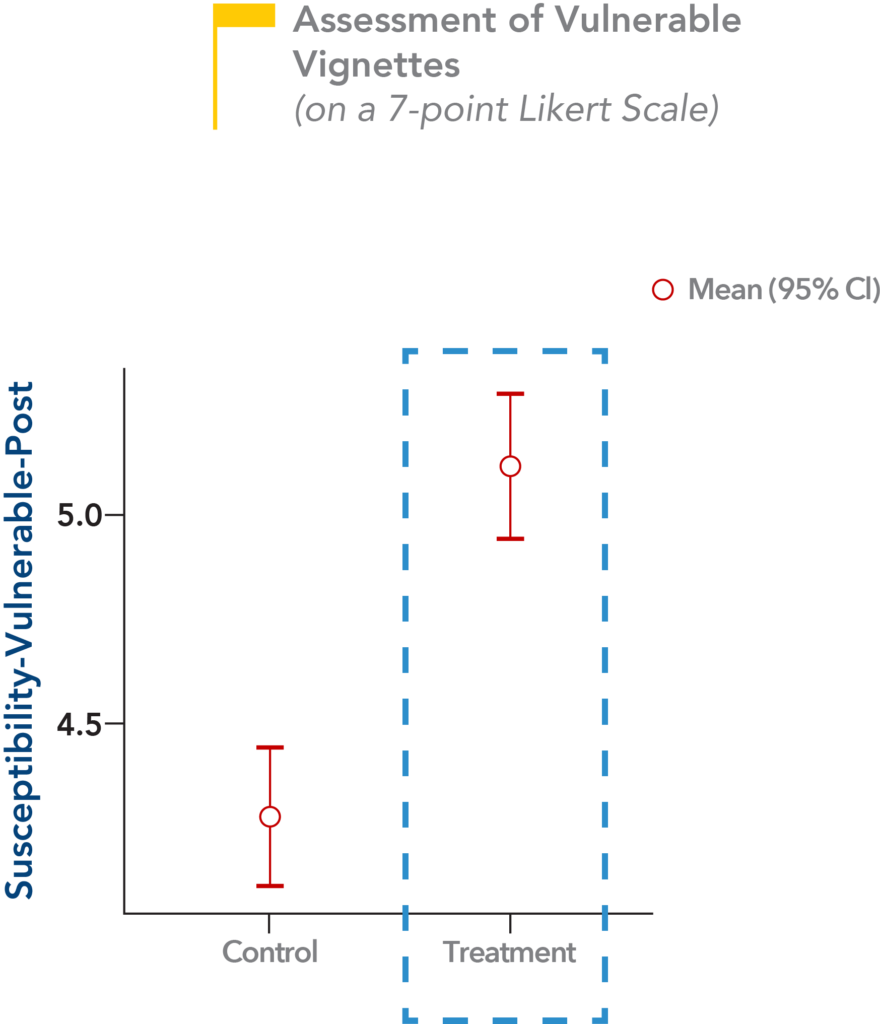
Participants played the Radicalise game, which gave them the opportunity to experience and orchestrate a simulated recruitment mission by taking the perspective of the “bad guy”. By way of playing the game, participants were cognitively engaged in the process of refuting weakened arguments that were presented to them about various manipulation techniques used in typical online extremist recruitments, helping confer attitudinal resistance against potential real attempts to target them with extremist propaganda. After playing the games, rated a number of WhatsApp messages for to their manipulativeness as well as a number of vignettes of people based on how vulnerable they are to extremist recruitment.
Impact:
After playing the game, the treatment group is significantly better at assessing the manipulativeness of these messages, compared to the control group. The treatment group were also significantly better at identifying the vulnerability of targets.